
At Yuejing Machinery, we deliver fast, precise, and cost-effective 3D printing solutions using SLA, SLS, MJF, and FDM technologies. From early prototypes to intricate, production-ready geometries, our expertise transforms your designs into high-quality plastic and resin parts. Every print is engineered for accuracy, durability, and a professional finish, helping you move from concept to reality with confidence.
From detailed resin to durable, hard nylon parts, we offer SLA, SLS, MJF, and FDM services that cover the full range of your prototyping and low-volume needs
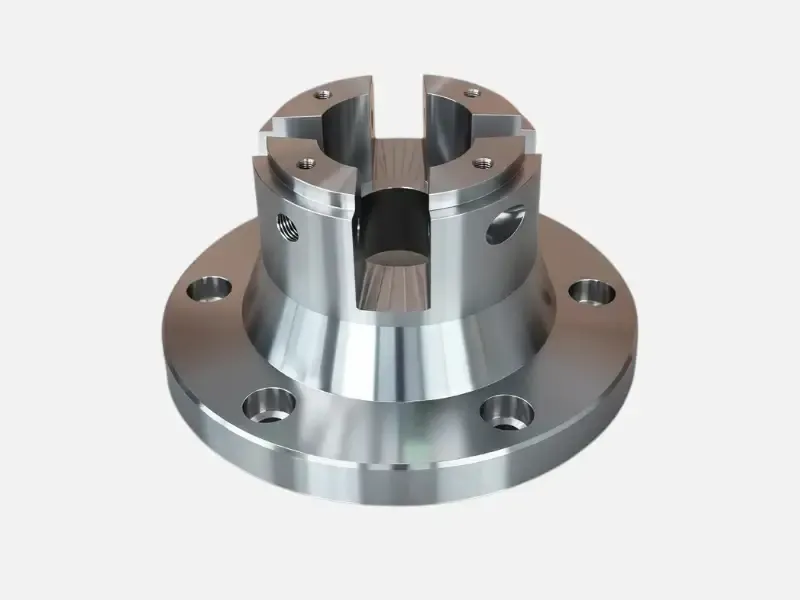
Ideal for prototypes that demand fine detail and a smooth finish. SLA uses a laser to cure liquid resin layer by layer, creating highly accurate parts with intricate geometries. Perfect for visual models, design verification, and parts requiring tight tolerances before moving into production.
Produces strong, durable nylon parts without the need for support structures. SLS fuses nylon powder using a high-powered laser, resulting in parts that can withstand functional testing, mechanical stress, and real-world conditions. Ideal for functional prototypes, housings, and load-bearing components.
Specialized in producing high-quality black nylon parts with excellent mechanical properties and fine surface detail. MJF uses a fusing agent and detailing agent to achieve consistent accuracy and strength.
An economical choice for early-stage concepts and basic functional testing. FDM extrudes thermoplastic filament layer by layer, producing sturdy parts quickly at low cost. Ideal for large-scale prototypes, jigs, fixtures, and low-complexity models where cost-efficiency is a priority.
Selecting the right material is defines how your part performs, its exterior, and properties. At Yuejing Machinery, we offer a wide range of engineering-grade plastics and resins to suit different needs in strength, detail, flexibility, and finish. Below are three of our most-requested options, and our engineers can help you match the ideal material to your application.
ABS is a reliable choice for strong, lightweight parts that need impact resistance and dimensional stability. It’s ideal for enclosures, housings, and functional prototypes in consumer electronics, automotive, and industrial equipment. With a smooth finish and easy post-processing, ABS parts can be painted, plated, or textured for a professional look.
Nylon (PA12, PA11) offers excellent wear resistance, flexibility, and strength, making it perfect for moving components, gears, brackets, and mechanical fixtures. Its low-friction properties and ability to handle repeated stress make it a go-to material for robotics, automation, and high-performance applications.
Resin printing delivers unmatched precision and surface quality, making it perfect for intricate designs, small features, and visually appealing prototypes. Transparent, flexible, and heat-resistant resin options allow for functional testing while maintaining an exceptional aesthetic. Ideal for models, ergonomic prototypes, and parts where appearance matters as much as performance.
The aerospace industry is one of the most demanding sectors in terms of quality control, often requiring tight tolerances and lightweight, complex geometries. With 3D printing, Xinprototype produces parts that are difficult or costly to machine — including cabin interior components, ducting, brackets, and housings, as well as shop-floor jigs and fixtures. Using SLS and MJF nylon, we deliver strong, functional parts ready for fit checks, testing, and low-volume production.
Learn more →SLA provides the part with the finest detail and smoothest surface, suitable for visual models and cosmetic parts. SLS and MJF print strong nylon and don’t need support structures, which is best for functional and load-bearing parts. FDM is the most economical processing for concepts and large parts.
Pricing comes down to a few things. Material is the first point, engineering plastic material costs more than standard plastics. Weight matters too, since a larger or denser part simply uses more raw material. And the structure is key as well; intricate geometry, thin walls, or designs that need heavy support or special jigs add extra cost. Finally, surface finishing adds to the costs.
It depends on what the part is for. Resin is the best pick for visual models and cosmetic prototypes. It’s less about strength and more about looking sharp. For most industrial applications, we recommend ABS. It offers a great balance of stability and durability, holds its dimensions well, and takes post-processing beautifully. It can be sanded, painted, or textured for surface finishes. When strength is the priority, go with nylon. It resists wear, impact, and repeated stress.
Usually, we accept STEP or STL format CAD files for 3D printing parts. We’ll review of the parts Manufacturing feasibility, from wall thickness, structure, and the geometr.
3D printing wins at low volumes because there’s no tooling to pay for up front. Once you’re into the thousands of parts, molding usually takes over. But the exact crossover depends on the part’s size, complexity, and material, and it can range widely.
3D printing has come a long way in both materials and mechanical performance, but injection-molded and CNC- machined parts are still hold an edge in raw strength, consistency, and durability. However, for most applications, 3D printing is more than strong enough for prototypes and functional testing.
Add: Building F, No.2 Nanling Road, Xin'er Community, Xinqiao Subdistrict, Bao'an District, Shenzhen, Guangdong Province, P.R.China
Email: 1281883259@qq.com
Phone: +86 18948799832